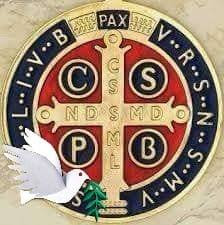

commercianti degli schiavi: dalit dhimmi e goyim sono alleati tra di loro! CSPBCSSMLNDSMDVRSNSMVSMQLIVB drink your poison made by yourself, BURN SATANA ROCKEFELLER ALLAH IN JESUS’S NAME
50 immigrati stipati in casolare non scattano espulsioni https://voxnews.info/2019/02/15/50-immigrati-stipati-in-casolare-non-scattano-espulsioni/
noi venivamo pagati 10 euro ad ora
loro vengono pagati 3 euro ad ora.. adesso il Pd ha trasformato in schiavi tutto il popolo italiano!
By Rabbi Ari Enkin, Rabbinic Director, United with Israel
This week’s Torah portion is “Tetzaveh”(Exodus 27:20–30:10), and it
focuses primarily on the manufacture of the clothes worn by the priests
and High Priest when serving in the Mishkan (Tabernacle) and, later, in
the Holy Temple.
The reading opens with some of the instructions on lighting the
Menorah in the Mishkan. As it says:“And you shall command the Children
of Israel to take clear olive oil, crushed specifically for lighting, to
raise the light of the lamp.”
TheTalmudinfers from the words “to raise the light of the lamp”
that, when the priest would light the Menorah (seven-branched candelabra
used in the Mishkan and Holy Temple,) he was required to keep the fire
upon the wick until the flame was completely lit and flickering. He
would not remove his hand from lighting the flame until he was sure that
the lamp had fully taken.
The sages explain an important lesson here on education and
parenting. Each of the utensils of the Mishkan symbolized different
facets of religious life. The Menorah, especially the lights of the
Menorah, are symbolic of Torah and Torah study. As the Proverb says,
“The Torah is light.”
We learn from the fact that the priest was required to ensure that
the flame was fully self-sufficient before removing his hand that a
teacher must not stop teaching and explaining until the student is like
the flame that is self-sufficient and “burning” on its own. Whether it’s
a teacher or a parent – one must never stop imparting, explaining and
inspiring.
The Talmud tells the story of Rabbi Preida. One of his students
needed the lessons to be repeated 400 times in order to understand the
material properly. Once, when the student still didn’t understand, Rabbi
Preida sat and taught him the lesson 400 times more – with love and
patience. We are told that after this event, a Divine voice was heard
saying that Rabbi Preida would be given long life and a very special
place in the World to Come.
Most teachers feel that their students will always be their students
and will learn from them forever. And, in many, cases, a teacher may
enjoy this feeling. Our sages say, however, that the best teacher is the
one who can finish his or her job, so to speak, so that the student
will be able to manage independently – like the lamp that was lit in the
Mishkan.
For more insights by Rabbi Enkin on this week’s Torah portion, click on the links below:

 KING of kings Unius REI